Carbonara Egg Muffins with Jammy Yolks
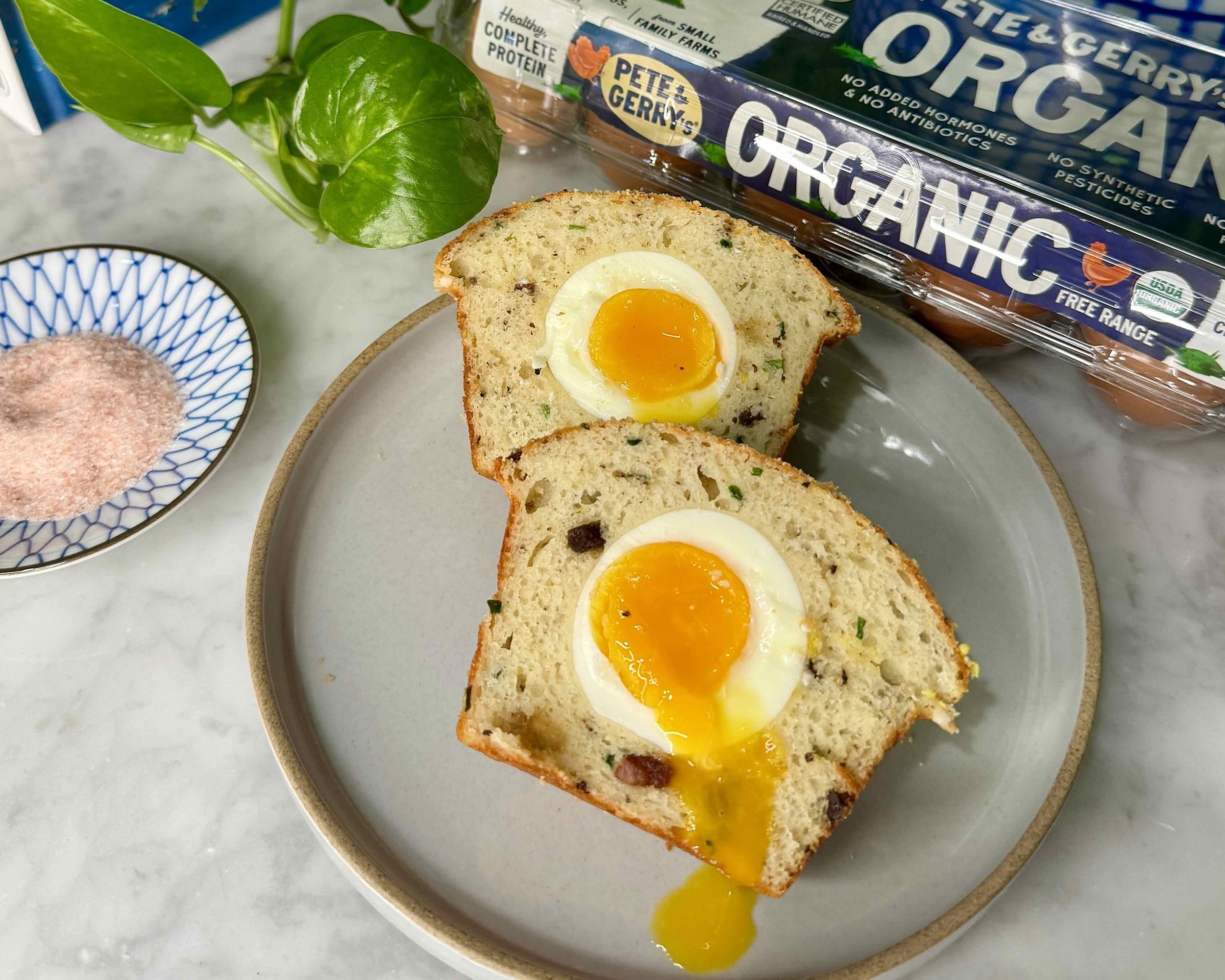
Cut the muffin open while it is still warm so the jammy yolk runs into the cheesy crumb like its own sauce.
Disclosure: This recipe was created in paid partnership with Pete & Gerry's. All opinions are my own.
This carbonara egg muffin takes everything I love about the Rebel Within—a savory pastry with a soft-boiled egg hidden in the middle—and gives it the Roman-pasta treatment. The muffin is packed with crisp guanciale, Pecorino, Parmesan, chives and lots of coarsely ground black pepper. Cut it open while it is still warm and the jammy yolk runs into the cheesy crumb like its own sauce.
The original Rebel Within comes from San Francisco's Craftsman and Wolves. Their version uses sausage, cheese and scallions; mine swaps in the defining flavors of carbonara. It is part breakfast, part pastry project and 100% built for the dramatic cross-section.
This is not a muffin to begin casually five minutes before brunch. The method has a few moving parts, but none of them is difficult when the eggs are boiled, the guanciale is crisp and the ingredients are measured before the batter comes together.
If you want these flavors in actual pasta form, myHoneynut Squash Carbonara leans into the same Pecorino-and-black-pepper situation with sweet roasted squash.
How I kept the yolk runny through two cooks
The hardest part of developing this recipe was not hiding an egg inside a muffin. It was making sure the yolk stayed runny after the egg went through a second round of cooking in the oven.
The eggs cook twice: first in boiling water and again inside the muffin. Six minutes gives the whites enough structure to peel and handle while leaving the centers soft enough to stay jammy after 20 minutes in the oven.
Start with eggs straight from the refrigerator and lower them gently into water at a controlled boil. A violent boil knocks the eggs around and increases the chance of cracks. As soon as the timer ends, move them to an ice bath to stop the cooking. Peel them under water, beginning at the wider end where there is usually a small air pocket.
Anything much softer becomes frustratingly delicate to peel. Anything firmer gives you less room for the second cook. This is one of those recipes where “close enough” and “exactly six minutes” are not close friends.
The flour trick that keeps the egg centered
Once the eggs are peeled, roll each one in a very thin coating of flour. The flour helps the thick muffin batter grip the slick egg and provides a little protection from the oven's heat.
Pipe a thin base of batter into each jumbo muffin cup before setting the egg in the center. Then pipe around the sides and over the top. Use a damp finger to close any open seams; exposed egg whites can dry out and the batter may split as it rises.
What makes it taste like carbonara
Guanciale, Pecorino, egg and black pepper do the heavy lifting. Render the guanciale from a cold pan so the fat melts gradually and the pieces become properly crisp instead of scorching on the outside. Pecorino brings salty sharpness, Parmesan rounds it out, and four teaspoons of coarse black pepper keep this from reading as a generic cheese muffin.
If guanciale is unavailable, bacon will work structurally, though it brings a smokier flavor.
Set yourself up before mixing
This is a mise-en-place recipe. Bring the sour cream, two batter eggs and milk to room temperature. Cook the guanciale, grate and divide the cheeses, chop the chives, measure the dry ingredients and grease the pan before you combine anything.
Once the wet and dry mixtures meet, stir only until they are mostly combined, then fold in the cheese, chives, pepper and guanciale. The batter should be thick enough to pipe and hold around the egg. Overmixing will make the crumb tougher, and stopping halfway through to grate cheese is how a fun brunch project becomes kitchen hostage negotiation.
Watch How to Make Carbonara Egg Muffins
Watch the full method before you start. The video shows the texture of the batter, how lightly to flour the eggs and how to pipe around them without leaving exposed seams.
Make-ahead and same-day serving
These muffins are best hot and fresh, while the crumb is tender and the yolk is still soft. They can also be served at room temperature later the same day, but I would not reheat them. Another trip through the oven sets the yolk further and defeats the entire point of engineering that runny center.
To make brunch easier, cook the guanciale, grate the cheeses, chop the chives and mix the dry ingredients the day before. Refrigerate the guanciale, cheese and chives separately; keep the dry mixture covered at room temperature. Boil the eggs, mix the batter and bake the muffins on the day you plan to serve them.
Because the muffins contain cooked eggs, meat and dairy, do not leave them at room temperature for more than two hours. Refrigerate anything you will not eat within that window, with the understanding that the yolks will continue to set as the muffins cool.
For another over-the-top brunch project, try my Crispy Kimchi Rice Pancakes.
More brunch recipes
Corn Fritter BLT with Old Bay Mayo
Carbonara Egg Muffins with Jammy Yolks
A six-minute egg is tucked inside a savory jumbo muffin loaded with crisp guanciale, Pecorino, Parmesan, chives and coarsely ground black pepper. Serve the muffins warm so the soft yolk runs into the cheesy crumb.
Yield: 6 jumbo muffins | Prep time: 45 minutes | Cook time: 20 minutes | Total time: 1 hour 5 minutes | Category: Breakfast, Brunch | Cuisine: Italian-inspired American | Method: Baking
Equipment
Six-cup jumbo muffin pan
Medium saucepan
Large mixing bowl
Medium mixing bowl
Piping bag or large zip-top bag
Cooling rack
Offset spatula or thin butter knife
For the soft-boiled eggs
6 large eggs, cold from the refrigerator
Ice, for the ice bath
For the carbonara muffin batter
4 ounces (1/2 cup) guanciale, cut into batons
2 cups all-purpose flour, plus 1 tablespoon for coating the cooked eggs
3 tablespoons granulated sugar
1 tablespoon baking powder
1/2 teaspoon baking soda
1 teaspoon salt
1 cup full-fat sour cream, at room temperature
2 large eggs, at room temperature
3 tablespoons unsalted butter, melted and slightly cooled
2 tablespoons vegetable or canola oil
3 tablespoons whole milk, at room temperature
3/4 cup finely grated Pecorino Romano
3/4 cup finely grated Parmesan
3 tablespoons finely chopped chives
4 teaspoons coarsely ground black pepper
Pink Himalayan salt or flaky salt, for serving, optional
Instructions
Prepare an ice bath. Fill a medium bowl with ice and cold water and set it near the stove.
Boil the eggs for six minutes. Bring a medium saucepan filled about three-quarters full with water to a boil. Using a spoon, gently lower the six cold eggs into the water. Reduce the heat slightly so the water maintains a controlled boil without violently knocking the eggs around. Cook for exactly 6 minutes.
Chill and peel the eggs. Immediately transfer the eggs to the ice bath and let them sit for several minutes. Peel the eggs under water, beginning at the wider end. Handle them gently; the centers are still soft. Set the peeled eggs aside at room temperature while you make the batter.
Heat the oven and prepare the pan. Preheat the oven to 425°F. Thoroughly grease a six-cup jumbo muffin pan, including the upper edges of each cup, and set it aside.
Render the guanciale. Add the guanciale to a cold sauté pan, then place it over medium heat. Cook, stirring occasionally, until the fat has rendered and the pieces are crisp and browned on all sides. Transfer the guanciale to a paper-towel-lined plate. Discard the rendered fat or save it for roasting potatoes.
Mix the dry ingredients. In a large bowl, whisk together the 2 cups flour, sugar, baking powder, baking soda and salt.
Divide the cheese. In a small bowl, combine the Pecorino and Parmesan. Reserve 1/4 cup of the mixture for topping the muffins. The remaining 1 1/4 cups will go into the batter.
Mix the wet ingredients. In a medium bowl, whisk together the sour cream, 2 room-temperature eggs, melted butter, oil and milk until smooth.
Combine the batter. Pour the wet mixture into the dry mixture and stir with a spatula until mostly combined. Fold in the 1 1/4 cups cheese mixture, chives, black pepper and crisped guanciale just until evenly distributed. The batter will be very thick.
Coat the soft-boiled eggs. Place the remaining tablespoon of flour in a shallow bowl. Gently roll each peeled egg in a thin coating of flour and shake off the excess.
Begin filling the muffin cups. Transfer the batter to a piping bag or large zip-top bag with one corner cut off. Pipe a thin, even layer of batter into the bottom of each prepared muffin cup.
Add the eggs. Stand one flour-coated egg in the center of each cup. Pipe the remaining batter around the sides and over the top of each egg, distributing it evenly among the six cups.
Seal and top. Dampen a finger with water and close any open seams so the eggs are covered. Divide the reserved 1/4 cup cheese mixture evenly among the six muffin tops.
Bake. Bake for 20 minutes, rotating the pan halfway through, until the muffins are risen and deeply golden on top.
Remove them from the pan promptly. Run an offset spatula or thin butter knife around the edges and immediately transfer the muffins to a cooling rack. Leaving them in the hot pan will continue cooking the eggs.
Serve warm. Split the muffins in half and finish the yolks with a small pinch of pink Himalayan salt or flaky salt, if desired. Serve immediately.
Notes
This recipe is designed for a six-cup jumbo muffin pan. A standard 12-cup muffin pan will not comfortably hold a whole large egg plus the batter.
Use fridge-cold eggs and time the six-minute boil precisely; the eggs cook a second time in the oven.
Peeling underwater from the wider end helps you work under the membrane without tearing the delicate white.
The batter should be thick enough to pipe. Stir only until the ingredients are combined.
Divide the final 1/4 cup cheese among all six muffins.
The muffins are best hot and fresh or at room temperature the day they are made. Do not reheat them if preserving the soft center matters.
Do not leave the muffins at room temperature for more than two hours. Refrigerate anything you will not eat within that window, knowing the yolks will continue to set.
A soft or runny egg yolk carries a food-safety risk. Use pasteurized eggs or cook the centers fully when serving anyone who is pregnant, very young, elderly or immunocompromised.