Por Por’s Cantonese Sticky Rice (Lo Mai Fan)
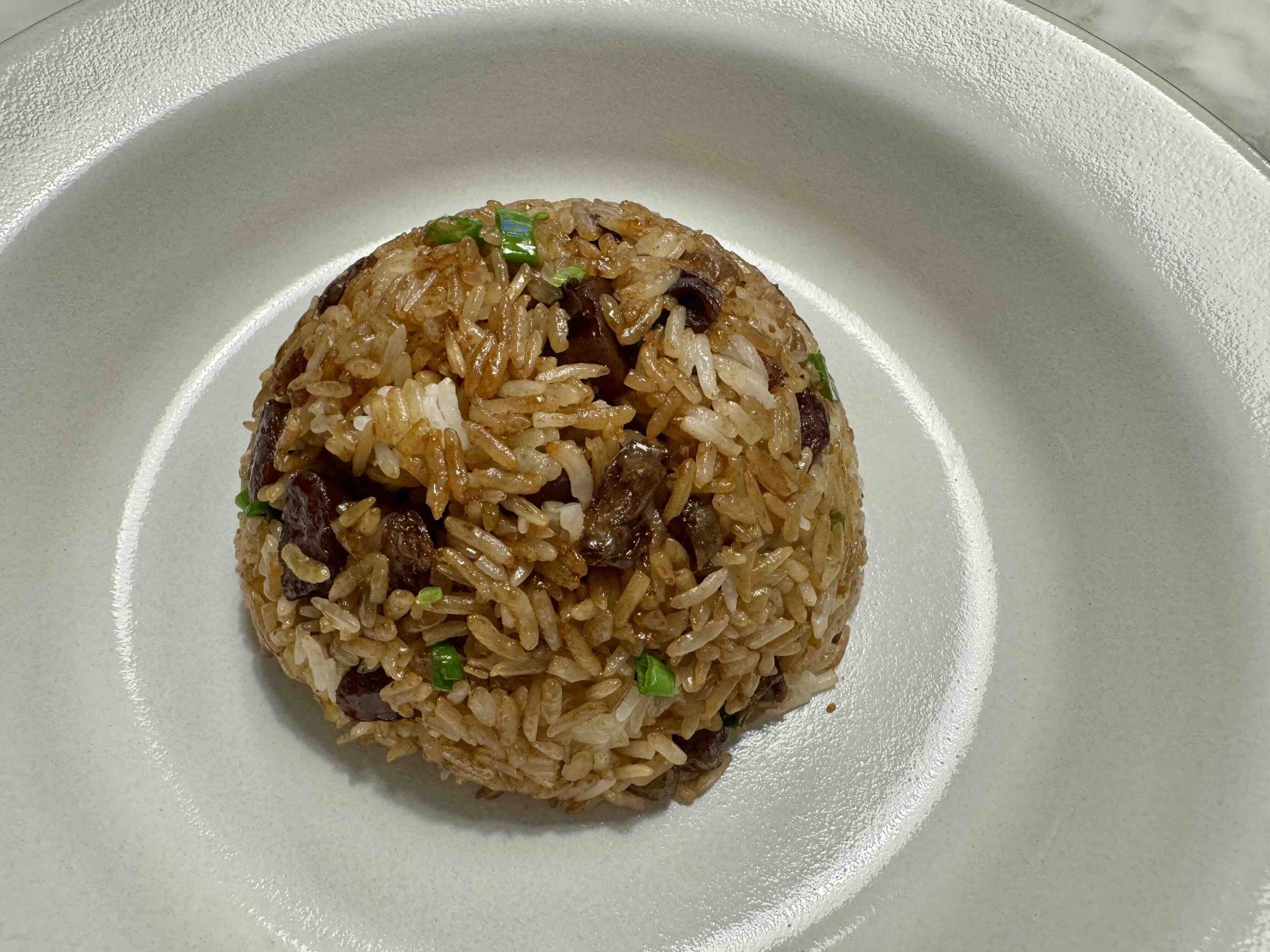
Pack the finished sticky rice into a small bowl, then turn it out onto a plate for that classic molded presentation.
Disclosure: This post contains affiliate links. As an Amazon Associate I earn from qualifying purchases.
My Por Por raised four children and spent long days cooking in a restaurant, so she had an entire repertoire of dinners that could be made entirely, or almost entirely, in a rice cooker. The last thing she wanted to do after cooking all day was come home and begin another production. Apparently one restaurant shift per day was enough.
Her weeknight meals were efficient, reliable, and never short on flavor. This Cantonese sticky rice, or lo mai fan, is one of them.
Her version is different for two reasons. First, she uses 2 cups of jasmine rice for every 1 cup of glutinous rice. The mixture can go through a regular rice-cooker cycle without soaking or special handling, and the finished rice stays pleasantly chewy instead of turning into a pot of mush.
Second, she adds thin strips of salted turnip and oyster sauce to the more familiar combination of lap cheong (Chinese sausage), lap yuk (Chinese cured pork belly), dried shrimp, and shiitake mushrooms. The result is savory, a little sweet, and packed with the kind of dried and preserved ingredients that make an excellent clean-out-the-pantry meal.
The rice-cooker method is the part to keep. Once the rice is cooked, the filling can move in a few directions. Ground beef, onions, and green peas seasoned with oyster sauce make one version. You can also take it toward fried rice with onions, scrambled eggs, and SPAM. It is less a rigid formula than a very useful answer to the question, “What do I have, and how quickly can I turn it into dinner?”
Why Por Por uses mostly jasmine rice
Many lo mai fan recipes lean heavily on glutinous rice. Por Por flips that ratio. Jasmine rice gives the dish more structure and distinct grains, while one part glutinous rice adds enough chew and cling to make it unmistakably sticky rice.
That ratio is also what makes this version so useful. Wash the two rices together, add them to the rice cooker with cold water, and use the regular white-rice cycle. There is no overnight soak and no separate steaming setup. Nobody needs to turn Tuesday dinner into an infrastructure project. It is the kind of practical choice that only becomes a family recipe after it works on an actual weeknight over and over again.
Two parts jasmine rice to one part glutinous rice is the entire trick: enough chew to feel like lo mai fan, but sturdy enough for a normal rice-cooker cycle.
The preserved ingredients that build the flavor
This is an excellent pantry meal because so much of its flavor comes from dried and preserved ingredients. They keep well, bring their own seasoning, and turn a pot of rice into dinner without demanding that the crisper drawer produce a miracle.
Lap cheong (Chinese sausage): Cantonese cured sausage with a sweet-savory flavor and plenty of rendered fat to coat the rice.
Lap yuk (Chinese cured pork belly): A meatier, saltier counterpoint to the sausage.
Dried shiitake mushrooms: Rehydrated and chopped, they add an earthy, savory layer. I left them out of the original recipe video because I did not have any, but I normally include them.
Dried shrimp: A small amount brings concentrated seafood flavor without making the finished rice taste overtly fishy.
Salted turnip: Thin strips add salt, umami, and a little textural contrast.
These harder-to-find ingredients can be ordered online: lap yuk, lap cheong, dried shiitake mushrooms, dried shrimp and salted turnip.
Salt note: Cured meats, salted turnip, soy sauce, and oyster sauce vary considerably by brand. Start with 1 teaspoon Diamond Crystal kosher salt in the sauce. Taste the cooked filling before mixing it into the rice, then add up to ½ teaspoon more only if it needs it.
Oops: I filmed the original video without the shiitake mushrooms because I was out. The written family recipe includes them, and soaking them separately gives you mushroom broth to use in the rice.
A rice cooker method built for weeknights
Cook the rice. Rinse the jasmine and glutinous rice together, add the measured water or mushroom soaking liquid, and start a regular rice-cooker cycle.
Prepare the filling. While the rice cooks, soak the mushrooms separately from the shrimp and salted turnip, cut the cured meats, and mix the seasoning sauce.
Render and season. Stir-fry the meats, mushrooms, shrimp, and turnip long enough to render some fat and wake up their flavor, then add the sauce.
Fold everything together. Toss the seasoned filling and scallions thoroughly through the hot rice until the grains are evenly coated and light brown.
Watch the methodology
The video shows the size of the chopped filling, how little color it should take on in the wok, and how to fold it through the cooked rice without smashing the grains.
Watch the original Cantonese sticky rice video on Instagram.
How to serve
You can spoon the rice straight from the cooker, but Por Por’s molded presentation takes about 10 seconds and makes it look like it came from a dim sum table. Pack a few scoops firmly into a small bowl, place a plate over the bowl, and flip the whole thing over. Lift the bowl away and finish with more sliced scallions. It is a very high return on 10 seconds of effort.
The cured pork, sausage, shrimp, and mushrooms make this substantial enough to eat on its own. It also works as part of a larger spread with Char Siu Fried Ribs or a simple bowl of Pork Bone and Daikon Soup.
How to store
Transfer leftover rice to shallow containers and refrigerate it within two hours. Keep it refrigerated for up to 3 to 4 days. Reheat only the portion you plan to eat until it reaches 165°F or is hot and steaming throughout.
For the simplest reheat, cover an individual portion and microwave it at full power for about 2 minutes, stirring halfway through, until the rice is hot and steaming throughout. Microwave strength and portion size vary, so add more time in short increments when needed.
Por Por’s Cantonese Sticky Rice (Lo Mai Fan)
Chewy jasmine and glutinous rice folded with Chinese sausage, cured pork belly, shiitake mushrooms, dried shrimp, and salted turnip, made with Por Por’s practical rice-cooker method.
Yield: 4 to 6 servings | Prep time: 20 minutes | Cook time: about 1 hour (varies by rice cooker) | Total time: about 1 hour 20 minutes | Category: Main Course, Side Dish | Cuisine: Cantonese | Method: Rice Cooker, Stir-Fry
Equipment
Rice cooker
Wok or large skillet
Wok spatula or heatproof spatula
Small mixing bowl
For the sticky rice
2 cups jasmine rice
1 cup glutinous rice or sweet rice
2 standard U.S. measuring cups cold water, or strained mushroom soaking liquid plus enough cold water to equal 2 cups total
For the filling
1 cup lap cheong (Chinese sausage), about 2½ links, halved lengthwise and sliced crosswise into small half-moons
1 cup lap yuk (Chinese cured pork belly), cut into ¼-inch-thick batons
1 cup dried shiitake mushrooms (about 15–20), measured before soaking
½ cup dried shrimp
¼ cup salted turnip
2 tablespoons vegetable or canola oil
4 scallions, thinly sliced
For the seasoning sauce
½ teaspoon ground white pepper
½ teaspoon MSG
1 teaspoon granulated sugar
1 teaspoon Diamond Crystal kosher salt, plus up to ½ teaspoon more to taste
1 tablespoon regular soy sauce
1½ teaspoons dark soy sauce
1 tablespoon oyster sauce
Instructions
Soak the dried ingredients. Place the dried shiitake mushrooms in one bowl. Place the dried shrimp and salted turnip together in a second bowl. Cover both groups with warm water and soak for 10 minutes.
Wash the rice. Combine the jasmine and glutinous rice in a large bowl or the rice-cooker insert. Cover with cold water and gently agitate the grains between your fingers to release excess starch. Drain and repeat 3 or 4 times, until the water is mostly clear. Drain well.
Cook the rice. Remove the mushrooms from their bowl and strain the mushroom soaking liquid. Transfer the washed rice to the rice cooker and add the mushroom liquid plus enough cold water to equal 2 standard U.S. measuring cups total. If you do not want to use the mushroom liquid, add 2 cups cold water. Cook on the regular white-rice cycle for about 1 hour, until the machine indicates that the cycle is complete.
Mix the seasoning sauce. While the rice cooks, stir together the white pepper, MSG, sugar, 1 teaspoon Diamond Crystal kosher salt, regular soy sauce, dark soy sauce, and oyster sauce in a small bowl until the sugar and salt dissolve. Reserve the remaining ½ teaspoon salt for the final adjustment.
Prepare the filling. Drain the soaked shrimp and salted turnip. Chop the shrimp and shiitake mushrooms into small pieces, and slice the turnip into thin strips. Halve the lap cheong lengthwise, then slice the halves crosswise into small half-moons. Cut the lap yuk into ¼-inch-thick batons.
Cook the filling. Heat a wok over medium-high heat and add the oil. Add the lap cheong, lap yuk, shiitake mushrooms, dried shrimp, and salted turnip. Stir-fry for about 5 minutes, until the cured meats are cooked through and have released some of their fat. Keep everything moving. The filling should be hot and fragrant but not deeply browned.
Add the seasoning sauce and taste. Pour the sauce into the wok and stir-fry for 1 minute, coating the filling evenly. Taste the cooked filling. If it needs more salt, add the reserved Diamond Crystal kosher salt ¼ teaspoon at a time, up to ½ teaspoon total. Turn off the heat and let the mixture wait in the wok until the rice finishes cooking.
Fold the filling into the rice. When the rice-cooker cycle is complete, add the cooked filling and sliced scallions to the rice. Toss thoroughly but gently, lifting from the bottom, until the filling is evenly distributed and the grains are coated a light, glossy brown.
Serve. Spoon the sticky rice into bowls and serve hot. For the molded presentation, firmly pack the rice into a small bowl, invert it onto a plate, and lift the bowl away.
Notes
Do not replace the entire rice mixture with glutinous rice without adjusting the method and liquid. Por Por’s 2:1 jasmine-to-glutinous ratio is what makes this version dependable on a regular rice-cooker cycle.
Oops: I filmed the original video without the shiitake mushrooms because I was out. The written family recipe includes them, and soaking them separately gives you mushroom broth to use in the rice.
Measure the mushroom soaking liquid as part of, not in addition to, the 2 cups total cooking liquid.
Lap cheong, lap yuk, salted turnip, soy sauce, and oyster sauce vary in saltiness by brand. The recipe uses Diamond Crystal kosher salt. Start with 1 teaspoon, taste the cooked filling, and add up to ½ teaspoon more only if needed.
Rice-cooker cycle length varies by machine. Use the completed-cycle indicator instead of relying only on the 1-hour estimate.
Divide leftovers into shallow containers and refrigerate within 2 hours. Use within 3 to 4 days and reheat to 165°F or until hot and steaming throughout.
For an individual portion, cover and microwave at full power for about 2 minutes, stirring halfway through, then add more time in short increments if needed.